

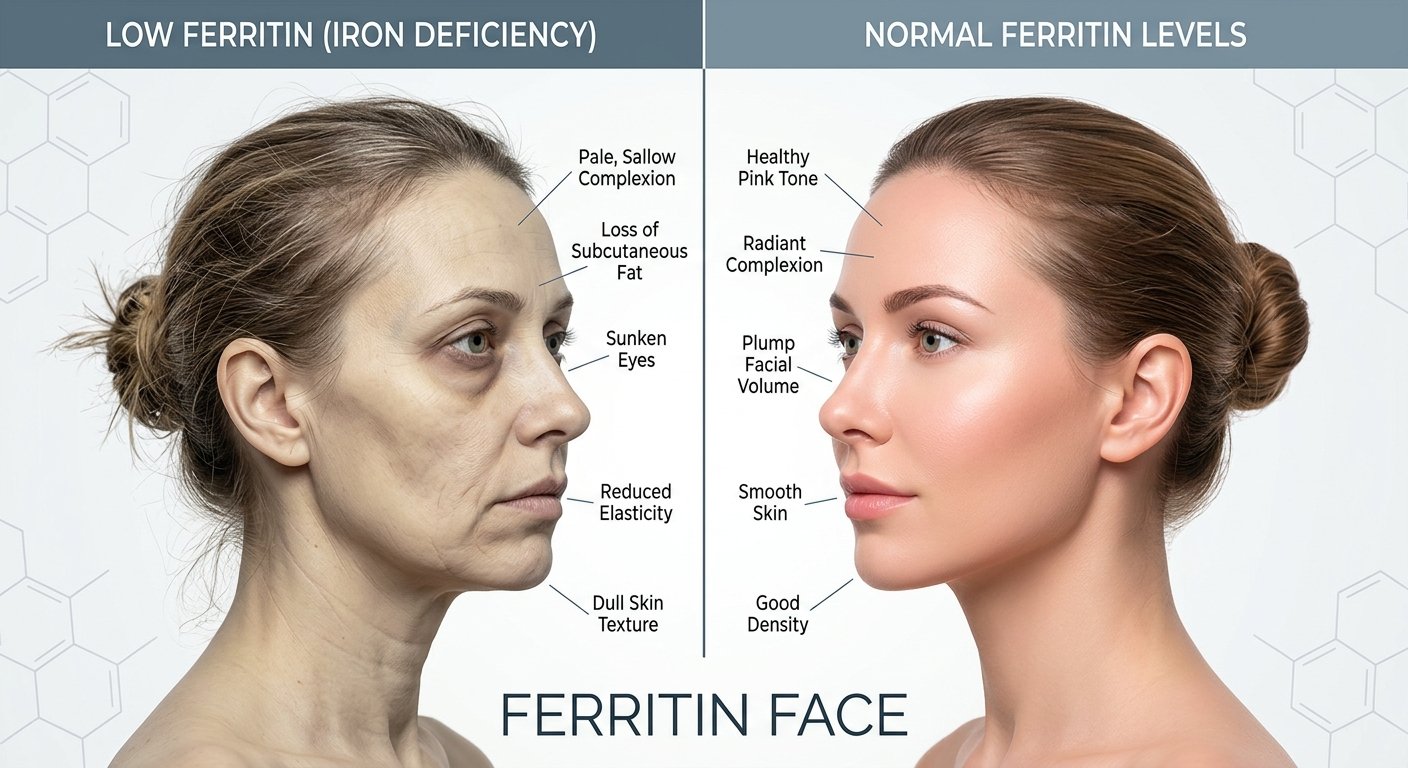
The connection between low ferritin (depleted iron stores) and changes in the appearance of the skin – such as sagging, loss of elasticity, volume, and density, a condition popularly referred to as “ferritin face” – is scientifically proven. Iron is not just an element for the blood; it is a critical participant in the cellular processes thmaintain skin structure.
What is Ferritin?
Ferritin is a protein that serves as the main storage for iron in the body. It stores iron in a safe, inactive form inside the cells (predominantly in the liver, bone marrow, and spleen) and releases it in a controlled manner when the body experiences a need for it for vital processes such as the production of red blood cells.
Here are the Main Reasons Why Low Ferritin Leads to the Respective Aesthetic Problems:
Tissue Hypoxia (Cellular Starvation for Oxygen)
Iron builds hemoglobin, which carries oxygen to all organs, including the largest one – the skin.
- With low ferritin the flow of oxygen to the skin decreases sharply.
- Without enough oxygen the metabolism of cells in the epidermis slows down, they cannot renew themselves effectively, and the skin loses its “fullness”, vitality, and natural volume, appearing thinned and sunken.
Blocking of Collagen Synthesis
Iron is a mandatory cofactor for enzymes (prolyl hydroxylase and lysyl hydroxylase) that are responsible for assembling and stabilizing collagen fibers in the dermis.
- Collagen provides the “scaffolding” and density of the skin.
- When ferritin is low, cells (fibroblasts) do not have enough iron to produce healthy and mature collagen. The result is tissue relaxation, appearance of fine lines, and sagging.
Impaired Mitochondrial Function
Mitochondria are the “powerhouses” of cells, and their enzymes are highly dependent on iron. When stores are empty, skin cells enter an energy deficit. They lose their ability to produce and retain components of the extracellular matrix, such as hyaluronic acid and elastin, which leads to dehydration and loss of elasticity.
Reduced Microcirculation and Pale Color
In the absence of iron, capillaries in the face constrict and close to redirect the little available oxygen to vital organs (heart, brain). This causes the pronounced paleness characteristic of the deficiency. The lack of good blood flow deprives the skin of nutrients, which enhances the feeling of a dull and “unhealthy” appearance.
Diagnostics and Reference Values
Testing ferritin in the blood is the most accurate way to assess the actual iron reserves (stores) of the body, as the levels of free iron ions in the blood can vary daily.
- Low ferritin: Means depletion of iron stores. This is an early sign of deficiency that happens even before actual iron deficiency anemia develops. Symptoms include chronic fatigue, hair loss, dizziness, paleness, and shortness of breath.
- High ferritin: Means either iron overload (hemochromatosis) or, more commonly – the presence of acute or chronic inflammation, infection, or liver disease in the body, as ferritin also reacts as an “acute-phase protein” during inflammatory processes.
Reference Values (Guidelines)
Ferritin levels vary depending on the laboratory, age, and gender:
- Men: 20 – 500 ng/mL
- Women (pre-menopause): 20 – 200 ng/mL (often the lower limit below 30-45 ng/mL already signals a deficiency in the presence of symptoms)
- Children: 7 – 140 ng/mL
The test is performed in the morning, on an empty stomach, via a venous blood sample. If you take iron supplements or vitamins, you should consult a doctor on whether to discontinue them before the test.
Why You Should Not Take Iron “On Your Own”?
- Risk of overdose and toxicity: Iron is not easily excreted from the body. If ferritin and iron levels are normal or high, taking additional iron can lead to a condition called hemosiderosis or iron overload. This can seriously damage the liver, heart, and pancreas.
What to Do If You Have Suspicions?
If you suspect you have anemia or low ferritin (due to symptoms such as hair loss, chronic fatigue, paleness):
- Do blood tests: Complete Blood Count (CBC), Serum Iron, TIBC (Total Iron Binding Capacity), and Ferritin.
- TIBC (Total Iron Binding Capacity) or Transferrin: Transferrin is the protein that transports iron. In deficiency, the body produces more transferrin to “catch” the dwindling iron, which is why TIBC increases.
- C-reactive Protein (CRP): Since ferritin increases during inflammation, low or normal ferritin with high CRP can mask a real deficiency. Testing pure CRP confirms that the ferritin result is genuine.
How to Raise Ferritin Levels Safely?
Replenishing stores is a slow process. Iron reserves are filled on average within 3 to 6 months. The treatment options are:
- Medicinal therapy (Oral intake): Iron preparations are used in the form of capsules, tablets, or drops. Better absorbable and with fewer stomach side effects are trivalent iron complexes (e.g., iron protein succinylate) or sucrosomial iron.
- Dietary regimen: Emphasize heme iron (which is most easily absorbed by the body) – red meat, liver, eggs, turkey meat, mussels. Non-heme iron (from spinach, lentils, nettle, nuts) is absorbed significantly more difficultly.
Golden Rules for Taking Iron
Follow these rules for maximum absorption:
- Vitamin C is iron’s best friend: Take iron with a glass of fresh orange juice or a Vitamin C supplement. It improves absorption in the small intestine.
- Enemies of iron(Separate intake by at least 2 hours from):
- Coffee, black, and green tea (contain tannins that block iron).
- Dairy products and calcium supplements.
- Antacids (medications for reducing stomach acid).
- Whole grain foods (due to phytate content).