







Goodbye to Ingrown Hairs: Natural Solutions for Smooth Skin Without Inflammation
We all know this disappointment: we have just finished with hair removal, expecting perfectly smooth skin, when a few days later they appear – the annoying, red, and often painful ingrown hairs. Not only do they ruin the aesthetics, but they can also lead to unpleasant inflammation and dark spots.
Before reaching for expensive alcohol-based lotions that dry out the skin, let’s look at how organic cosmetics and a few clever homemade recipes can solve this problem forever.
Why do ingrown hairs appear?
The mechanism is simple: the hair is cut or plucked, but when it starts to grow again, instead of breaking through the surface of the skin, it curls and starts growing inward. This most commonly happens for two reasons:
- Accumulation of dead skin cells that block the exit of the hair follicle (the pores are “clogged”).
- Aggressive methods of hair removal, such as shaving against the direction of growth with a dull blade.
The body recognizes the ingrown hair as a foreign body and reacts with inflammation. Here is how to deal with this in three easy steps, entirely with natural remedies.

Step 1: Regular Exfoliation (The Secret to Success)
If you want the hairs to grow freely, you must “open the way” for them. Exfoliating removes the layer of dead cells.
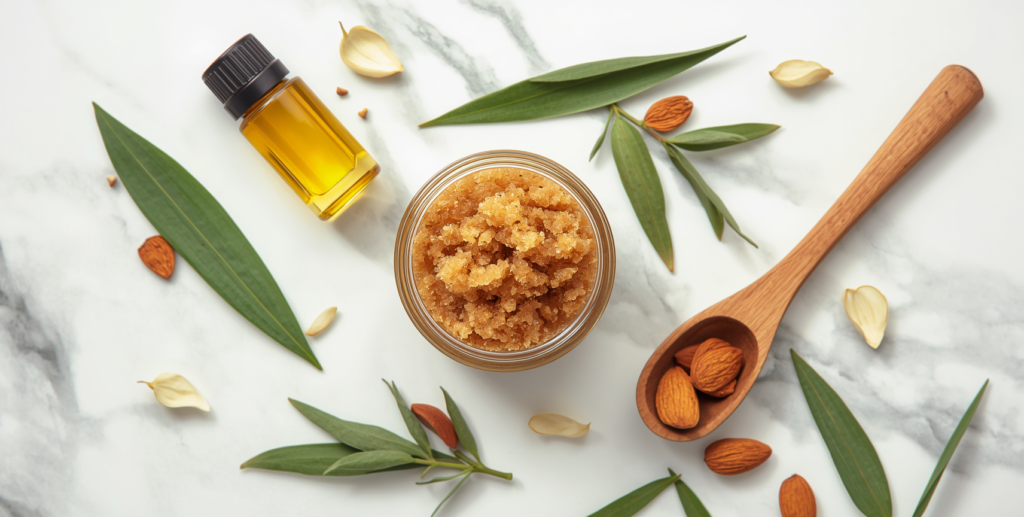
Recipe for SOS Tea Tree Scrub: Tea tree essential oil is the best friend of skin prone to ingrown hairs, thanks to its powerful antibacterial and anti-inflammatory properties.
- 1/2 cup brown sugar (coarse enough to exfoliate, but gentle on the skin)
- 1/4 cup carrier oil (almond oil, olive oil, or melted coconut oil)
- 10 drops tea tree essential oil
How to use: Mix the ingredients in a jar. Use the scrub in the shower 2-3 times a week, massaging the problem areas with light circular movements. Important: Do not exfoliate on the day of the hair removal itself, so as not to overstimulate the skin!
Step 2: Soothing Already Inflamed Areas
If you already have red bumps, do not try to squeeze or pick at them with tweezers – this can lead to infection and scarring. Instead, soothe the area:
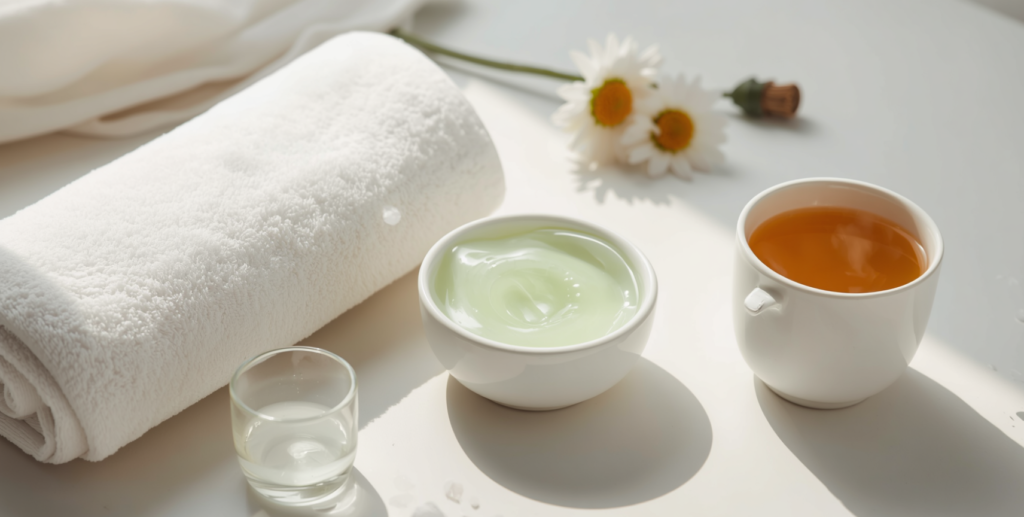
- Aloe vera and lavender: Mix 1 tablespoon of pure aloe vera gel with 2 drops of lavender essential oil. Apply topically to the inflamed areas. Aloe cools and hydrates, while lavender soothes the redness.
- Warm chamomile compress: Brew a strong chamomile tea, dip a cotton pad or small towel, and hold it over the ingrown hair for 5-10 minutes. The heat will open the pore, and the chamomile will reduce the inflammation.
Step 3: Golden Rules for Prevention
So you don’t have to treat the problem, it is best to prevent it. Here are a few quick rules:
- Always hydrate! Dry and rough skin is like a concrete wall for the growing hair. Moisturize your body daily with natural oils (shea or cocoa butter).
- Shave correctly: If you use a razor, always shave in the direction of hair growth, not against it. Use a sharp blade and natural soap or gel to provide glide.
- Wear loose clothes: Tight jeans or leggings immediately after hair removal create friction, which literally “pushes” the hairs back into the skin.
After hair removal, wipe the skin with a cotton pad soaked in apple cider vinegar (diluted with a little water). It restores the skin’s natural pH and acts as a mild chemical exfoliant, preventing infections.