




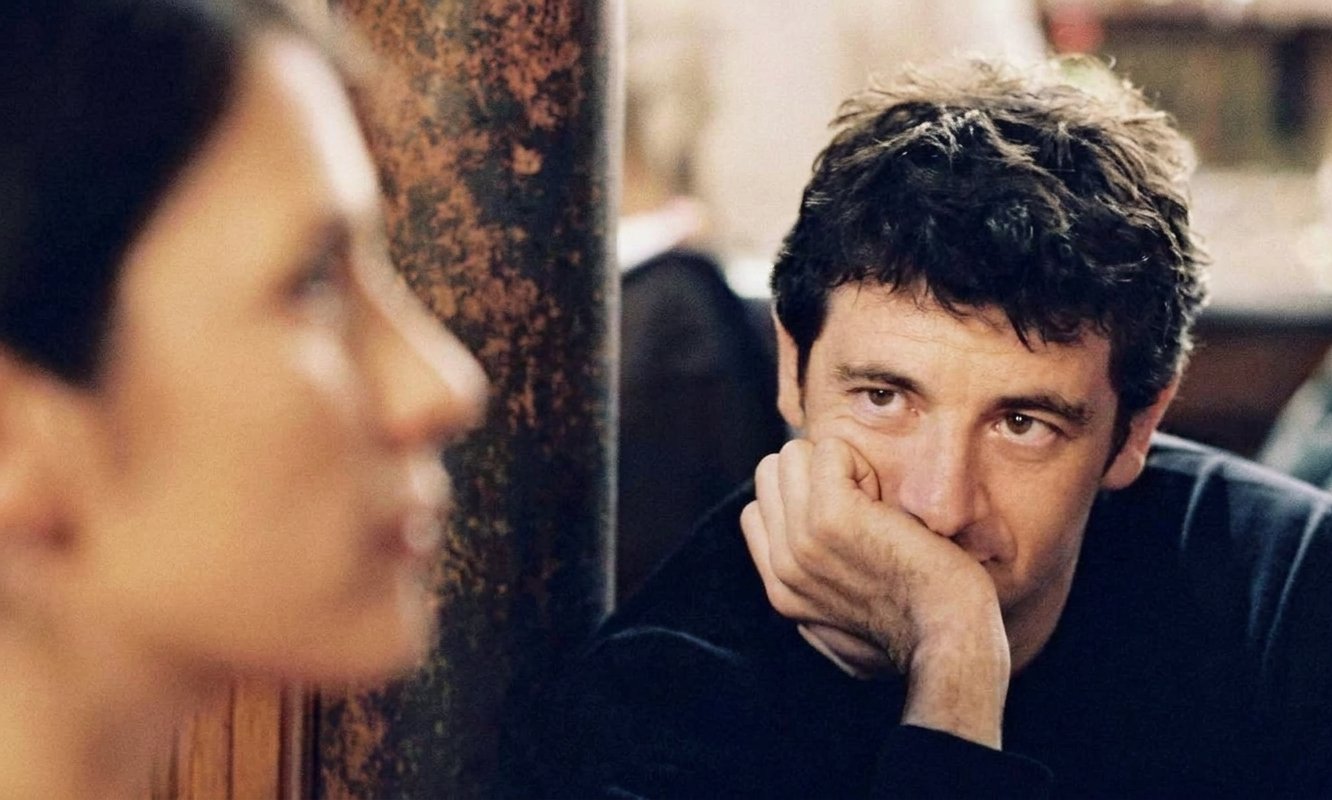
There is a special category of encounters in our lives that cannot be explained by rational logic. You walk into a room, catch the eye of a stranger, and instead of the usual process of getting to know someone, an ancient mechanism seems to trigger inside your chest — a feeling of recognition, a quiet certainty, and a magnetic pull that your mind cannot explain, but your heart has already classified. It feels too personal to be a mere coincidence, and too universal to be just a random chance.
Throughout the ages, humanity has always searched for a language to describe these invisible threads. Today, we call them soulmates, twin flames, or karmic companions. And while these terms may sound like products of modern esoteric culture, they are actually just new names for searches as old as time. They are the contemporary version of archetypal relationships whose roots reach deep into ancient myths, philosophy, and spirituality.
But let us first untangle the modern terminology:
Soulmates: These are souls belonging to the very same “spiritual family.” Meeting them brings an instant sense of recognition, deep understanding, and a feeling of being home. They can be not only romantic partners, but also loyal friends, teachers, or kindred spirits who support us on our path without traumatizing us.
Twin Flames: One soul split into two bodies. This is the most intense, mirrored, and often turbulent connection. Their meeting is not meant for comfort or ease, but for radical spiritual awakening — acting as a magnifying glass for all our hidden fears, traumas, and unfulfilled potential, compelling us to evolve.
Karmic Partners (Karmic Ties): Connections marked by powerful attraction, but also by recurring drama, tension, and unresolved lessons from the past. They arrive not to comfort us, but to teach us hard lessons, break old cycles, and set us free once we have gained their wisdom.
Spiritual Teachers / Catalysts: People who enter our lives like sparks — sometimes for only a brief moment. They reshape our worldview, push us toward a new direction in life or career, after which our paths usually part, though their mark remains forever.
When we begin to deconstruct these categories, it is easy to assume they are products of modern pop psychology and internet culture. The truth, however, is quite different. The longing for the “other half” and the sensation of meeting a soul we already knew have left footprints in every great civilization, philosophical school, and mystical teaching.
To discover where these concepts truly originate, we must turn back the clock to a time when people explained the unexplainable through the language of myth and the divine. And the first stop on this journey brings us to Ancient Greece.
The most famous written root of the “other half” idea is found in Plato’s Symposium (c. 385–370 BCE). In it, the philosopher relates a myth told by the playwright Aristophanes:
“In the beginning, human beings were perfect and round — having four arms, four legs, two identical faces on one head, and immense vital power. There were three genders: male (descended from the Sun), female (descended from the Earth), and androgyne (descended from the Moon, combining both male and female nature).
Due to their pride and attempts to compete with the gods, Zeus decided to weaken them rather than destroy them. He cut each creature into two halves.
From that moment on, every half spent its life in desperate longing to find its exact missing piece. Whenever the two halves met, they wrapped their bodies around each other, refusing to part, forgetting even food and water, driven solely by the desire to merge back into one whole.”
This myth laid the foundation for the Western understanding of the soulmate — not simply as a romantic partner, but as the restoration of our original wholeness.
In the first centuries after Christ (1st–3rd century CE), Gnosticism emerged as one of the most intriguing currents of early Christianity. For Gnostics, salvation came through direct, mystical spiritual knowledge (gnosis) of humanity’s divine origin. In their cosmological texts (later discovered at Nag Hammadi), the higher spiritual world (Pleroma) is described as being built of perfect divine pairs called Syzygies (from the Ancient Greek syzygia — union, pairing). According to Gnostic teaching, the divine contains in perfect balance both the male aspect (active spirit/wisdom) and the female aspect (receptive divine power). They exist not separately, but in complete union. According to certain Gnostic myths, when the human soul detached from the divine source and fell into the material trap of the earthly realm (created by a lesser demiurge), it lost its initial wholeness. Earthly life was seen as a long journey of forgetting, during which the soul nostalgically longed to reunite with its heavenly “spiritual counterpart” or lost divine twin. This idea brought into Christian mysticism the notion that true love and recognition are not merely biological instincts, but echoes of our cosmic origin.
If we turn to Jewish mysticism and Kabbalah, we discover the deep roots of the Twin Flames concept. The Kabbalistic text Zohar explains that before descending into the material realm, every soul exists as a single entity containing both male (Deker) and female (Nukva) aspects. Upon birth into the physical world, this single soul splits into two halves, inhabiting different bodies and following different life paths. Their reunion on Earth is considered a divine act. According to Kabbalah, however, this meeting does not happen automatically — it requires both halves to clear their spiritual debts and reach a certain level of internal maturity to endure the intense light and power of their merging.
In Hinduism and Buddhism, the concept does not revolve around a “divided soul,” but around the wheel of rebirth (Samsara) and Karma. According to Eastern teachings, across numerous lifetimes, we forge powerful energetic bonds with specific individuals. Encounters with them in our present life feel like instant recognition, though their nature depends on unresolved lessons from the past. Examples such as Shiva and Shakti, or the concept of Yin and Yang in Taoism, illustrate how two opposite yet complementary forces continuously seek out and dance with one another to maintain the cosmic balance of the Universe.
In the second half of the 20th century, with the rise of New Age culture and the evolution of depth psychology, these ancient metaphors took on brand-new life. Spiritual longing adapted to modern terminology, and the search for the “other half” transformed from a cosmic myth into personal self-actualization. During the 1970s and 1980s, these concepts gained wide popularity. This occurred not only through waves of new spiritual movements, but also due to the expansion of psychology and the growing freedom people found to communicate openly about their inner worlds, invisible bonds, and personal experiences. The topic gradually moved out of esoteric secret circles and entered the mainstream human dialogue.
In the end, whether we call it a soulmate, a twin flame, or simply an incredible coincidence, the essence remains unchanged. In a world that spins relentlessly and tosses us in a thousand directions, the greatest miracle remains that single moment when your eyes meet someone else’s, and suddenly, the noise fades away.